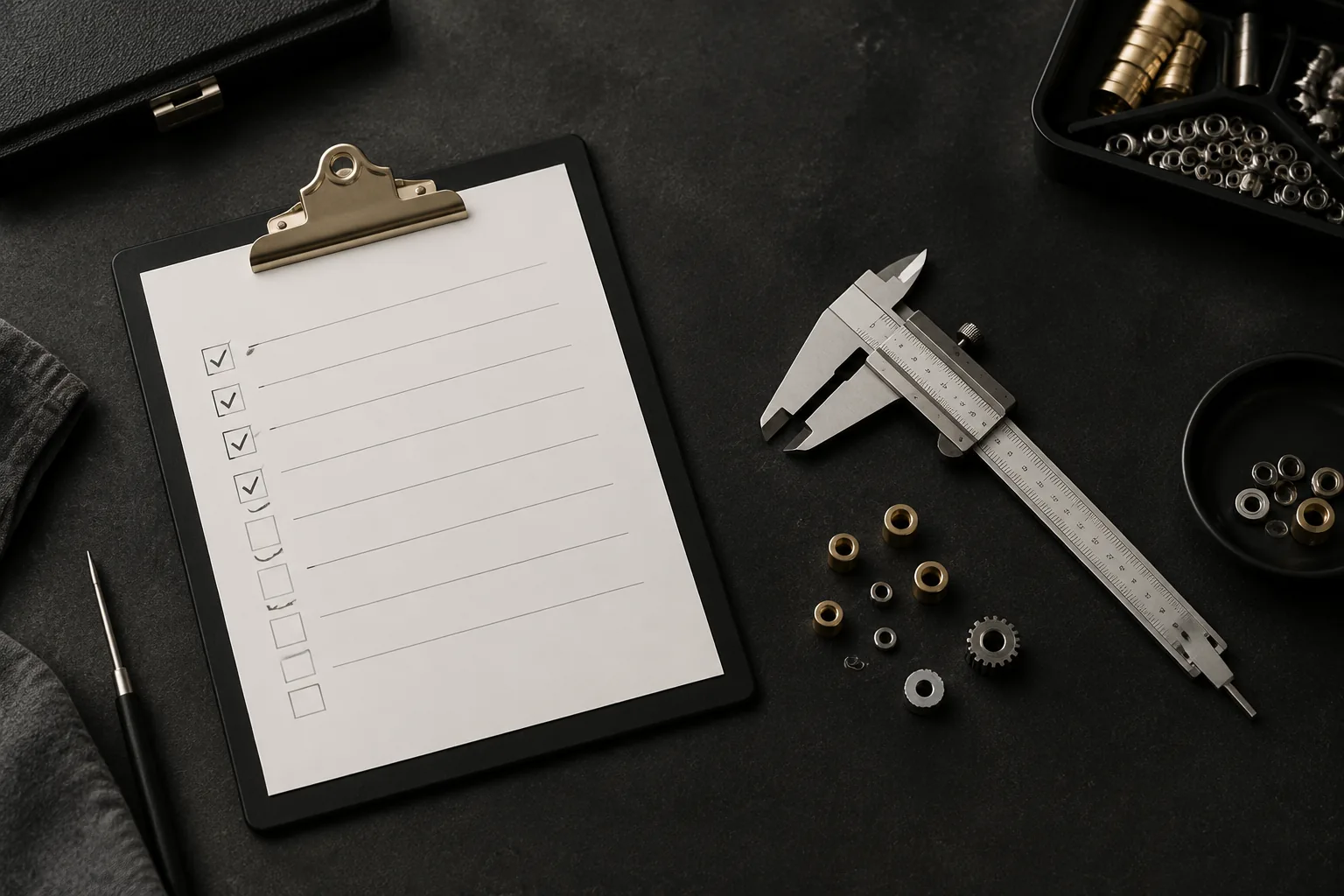
A factory audit answers the question a product catalog cannot: can this factory produce your product, at your standard, repeatedly, at the volume you plan to buy? This article provides a working audit checklist — the items that actually predict performance — plus the red flags that surface during a walk-through. It is written for buyers placing meaningful first orders or consolidating volume with an existing supplier, as part of a structured sourcing program.
When an audit earns its cost
Audits cost money and days, so they belong where the downside of a wrong supplier is large. The situations that justify one: a first order large enough to hurt if it fails; a single-source dependency you plan to build a product line on; regulated categories — children's products, food contact, electricals — where process failure carries compliance consequences; a supplier recovering from a quality failure, where you need evidence that the fixes are real; and any long-term agreement, where you are buying the factory's system as much as its product. For small trial orders, sampling and inspection discipline usually cover the risk. Audit when the stakes outgrow the sample.
Audit types and what each answers
| Audit type | Question it answers | Depth |
|---|---|---|
| Desktop verification | Is this factory who it claims to be? | Documents and records only — no site visit; the lighter sibling of full supplier verification |
| Capability (onsite) audit | Can this factory produce my product at my standard and volume? | Full visit: lines, equipment, systems, workforce |
| Social compliance audit | Does the factory meet the labor and ethical standards my channels require? | Records, worker interviews, site conditions |
| Process-specific audit | Is the specific process my product depends on under control? | Narrow focus: molding, sewing, assembly, plating or similar |
The checklist below is the framework for the second type — the onsite capability audit. It is also, with minor adaptation, the structure for judging an incumbent supplier you already ship with.
The capability audit checklist
Business and legal foundation
- Business license valid — and its registered scope actually covers your product category
- Factory address matches the registration: you are auditing the site you think you are auditing
- Export experience verifiable through shipping records and references from export customers of your market type
Production reality
- Machines relevant to your product are present and running — not merely present
- Line count and layout consistent with the claimed capacity; the workshop you see matches the products you buy
- In-house versus outsourced processes mapped: which steps of your product happen here, and which are subcontracted
Quality system
- Written QC procedures exist, and the staff can describe them without reading
- Dedicated inspection stations with calibrated instruments; calibration records current
- A defect sample library or boundary samples that inspectors actually reference during checks
- Incoming material inspection records — not just final inspection
Materials and traceability
- Storage conditions appropriate to your materials — moisture control for textiles, ESD discipline for electronics, as applicable
- Supplier management for key inputs: approved vendor lists, change control on materials
- Batch records capable of tracing a defect back to a production lot and forward to a shipment
Workforce and continuity
- Skilled worker pool adequate for your volume; the peak-season hiring plan is more than a promise
- Shift structure realistic against quoted capacity; turnover signals checked with direct questions
- A named engineer or merchandiser owns your account with real authority — not only sales
Subcontracting discipline
- A disclosure policy on subcontracting that would survive an unannounced follow-up visit
- For processes that will be outsourced: a clear answer on whether you can audit the subcontractor too
Red flags during the walk-through
- A sample room that functions as a showroom: perfect samples with no link to production records
- Spotless idle machines with no wear — equipment installed for visits
- QC staff who cannot say who they report to, or where their findings go
- No written work instructions at stations; everything depends on individual memory
- Areas off-limits without a credible reason
- Every question answered by one salesperson who never lets you talk to production
Any single flag deserves a follow-up question; several together deserve a different factory. The purpose of the walk-through is not to admire the facility — it is to watch the factory behave normally while you watch.
What you should receive afterward
An audit that produces only impressions has not happened. The deliverable is a written report: findings per checklist area, photographs, a scored or graded summary, and corrective actions with owners and dates wherever gaps were found. That report then works in three directions: as a negotiating document, where priced gaps become concessions; as a capacity-planning input, where line counts and shift structures meet your forecast; and as the baseline for the next audit, because improvement is only visible against a recorded starting point.
Audit and inspection then lock together. The audit says whether the system can hold your standard; inspections verify each shipment against it. For the product-level gates, see the quality and compliance program; for judging a factory's fit before even commissioning an audit, our capability assessment guide covers the pre-PO evaluation; and for the document-level checks that come before any site visit, see our supplier verification guide.
Frequently asked questions
How long does a capability audit take?+
Typically a day on site for a focused audit of one factory and product type; larger sites or broader scope run longer. The preparation — your checklist, product specification and question list — matters more than the visit length.
Can I audit a supplier I already work with?+
Yes, and incumbents often benefit most. An audit of a shipping supplier converts assumptions into findings, gives corrective actions a written baseline, and tells you whether the quality you have seen is a system or a streak.
What is the difference between an audit and an inspection?+
An inspection samples product from a specific batch against a standard. An audit examines the factory's systems and capability across production. Inspections catch bad shipments; audits reduce how many bad shipments there are to catch.
Do audits guarantee future quality?+
No — they assess capability at a point in time. Factories improve and degrade, which is why audits work best as a repeatable baseline: re-audit after major changes, after failures, or on a cycle for critical suppliers.